Author’s note: Written by a parent who has spent a decade refreshing snow day calculators on New England storm nights — the 87% spelling-test story you’re about to read is real.
I remember the night a snow day calculator raised our hopes. It was the big nor’easter back in January. My daughter was eight, and she had a spelling test the next morning she had definitely not studied for. Around 9 p.m., she asked me the question every parent knows by heart: “Do I have school tomorrow?”
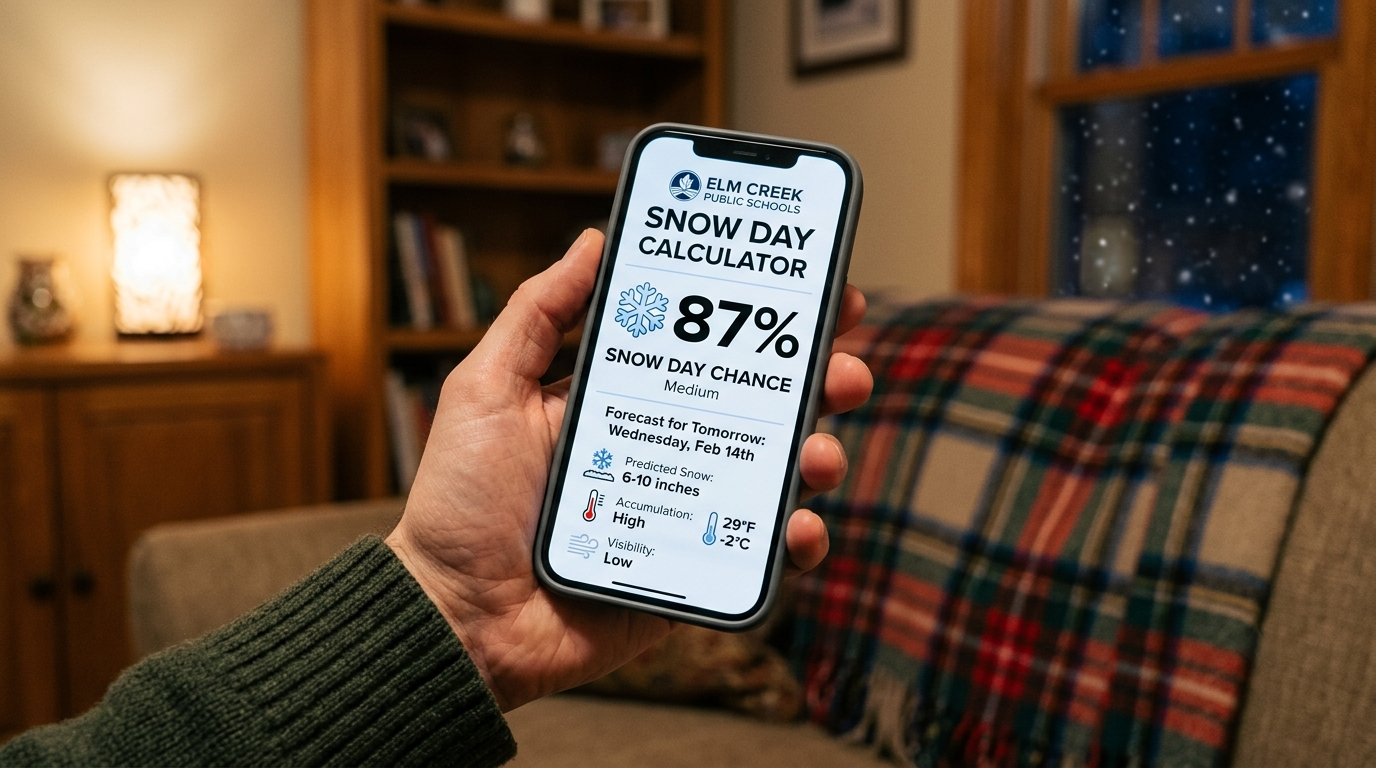
I pulled out my phone and opened the app. We live in a district that almost never closes. But the forecast called for eight inches starting at 3 a.m., right when the buses would be loading up. The calculator said 87% chance of a snow day. She went to bed happy.
She still took that spelling test.
That night taught me something: a snow day calculator is a fun little tool, but it’s not magic. Here’s how they work, why they miss, and what actually goes into a real school closing.
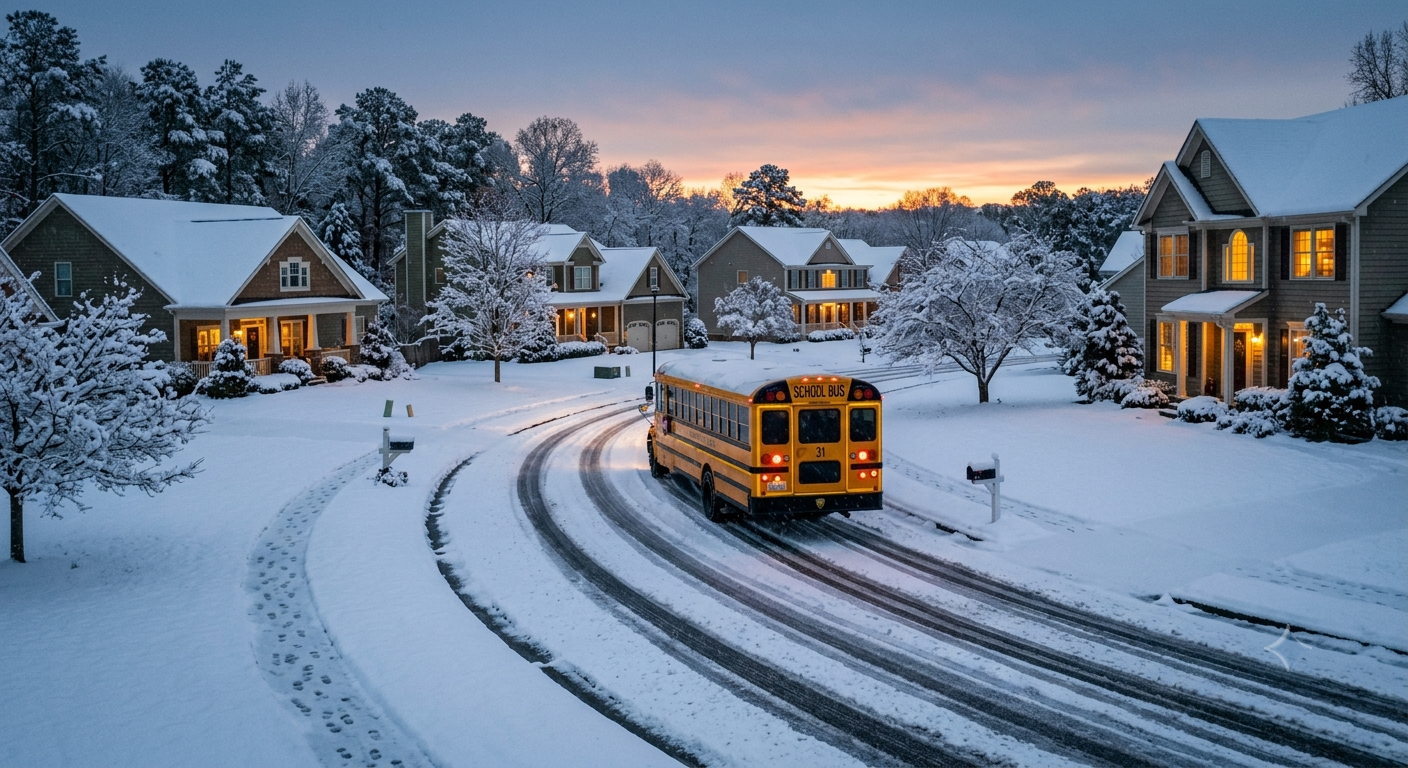
What Is a Snow Day Calculator?
A snow day calculator is a website or app that guesses the chance your school will close tomorrow. You type in your ZIP code, pick your school district, and it spits out a percentage based on the latest forecast and your district’s past closings. Simple as that.
The most famous one is the Snow Day Calculator, which has been around since 2007. There’s also Snow Day Predictor, plus a bunch of copycat apps in the app stores. They all work the same basic way: grab the latest forecast for your area and compare it to how much snow your district has historically canceled for.
Think of it like a weather app for your school schedule. Same idea, different question. Instead of “will it rain?” it asks “will they cancel?”
The Math Behind the Prediction
Under the hood, these calculators run on a few simple rules.
First, snow amount. Most districts have an unofficial threshold — usually 4 to 6 inches — where school starts to become a real question. The calculator takes the forecast snow total and compares it to that number.
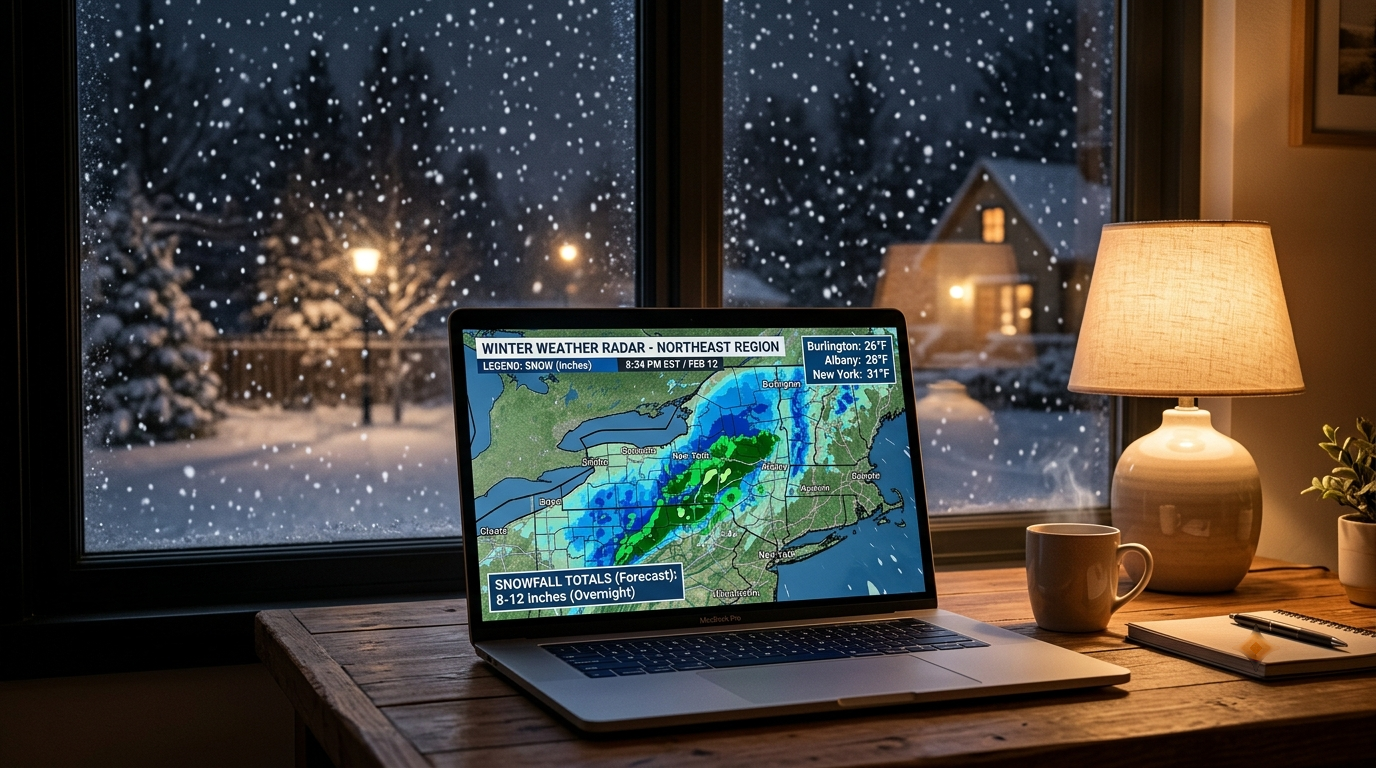
Second, timing. Snow that falls between midnight and 6 a.m. is the snow day dream. Snow that starts at 10 a.m., once everyone is already at their desk, does nothing. Forecasts from the National Weather Service include hourly timing, and the calculators lean hard on it.
Third, temperature and wind. A dry, fluffy 6 inches at 10 degrees is one thing. Six inches of wet cement with 40 mph gusts is another. Wind chill matters because kids stand at bus stops, and school buses struggle in whiteout conditions. Cold, windy storms push the percentage up fast.
Only problem: calculators read forecasts, and forecasts change. That 87% I saw at 9 p.m. was based on a storm that shifted east overnight. By 5 a.m., the roads were wet, not buried.
Key takeaway: Calculators read forecasts, and forecasts change. The 87% you see at 9 p.m. can be 20% by 5 a.m. Check the math, then check your district’s official alerts.
The Tools People Actually Use
If you want to join the snow day guessing game, these are the big names.
The Snow Day Calculator is the old reliable. It’s been predicting since the iPhone was new, and it tracks your district’s history, so it learns your school’s personality over time.
Snow Day Predictor is the other big one. It pulls live data and lets you check multiple districts at once, which is handy if you cross town lines for school or work.
Most weather apps have school closing pages now, too. AccuWeather and The Weather Channel list closures by district, but those pages only go live once schools actually announce, so they’re more of a confirmation tool than a prediction tool.
The snow day guessing game has even gone mainstream. USA Today walked readers through the Snow Day Calculator before a February 2026 nor’easter and revealed its creator: David Sukhin, a Massachusetts Institute of Technology graduate who built the tool almost 20 years ago. That percentage on your screen comes from a real storm, a real outlet, and a real MIT degree.
My honest advice? Use a calculator for the fun of it the night before, then check your district’s official alerts in the morning. The calculator guesses. The district decides.
How Schools Really Decide
Here’s what most kids never see: the 5 a.m. phone call.
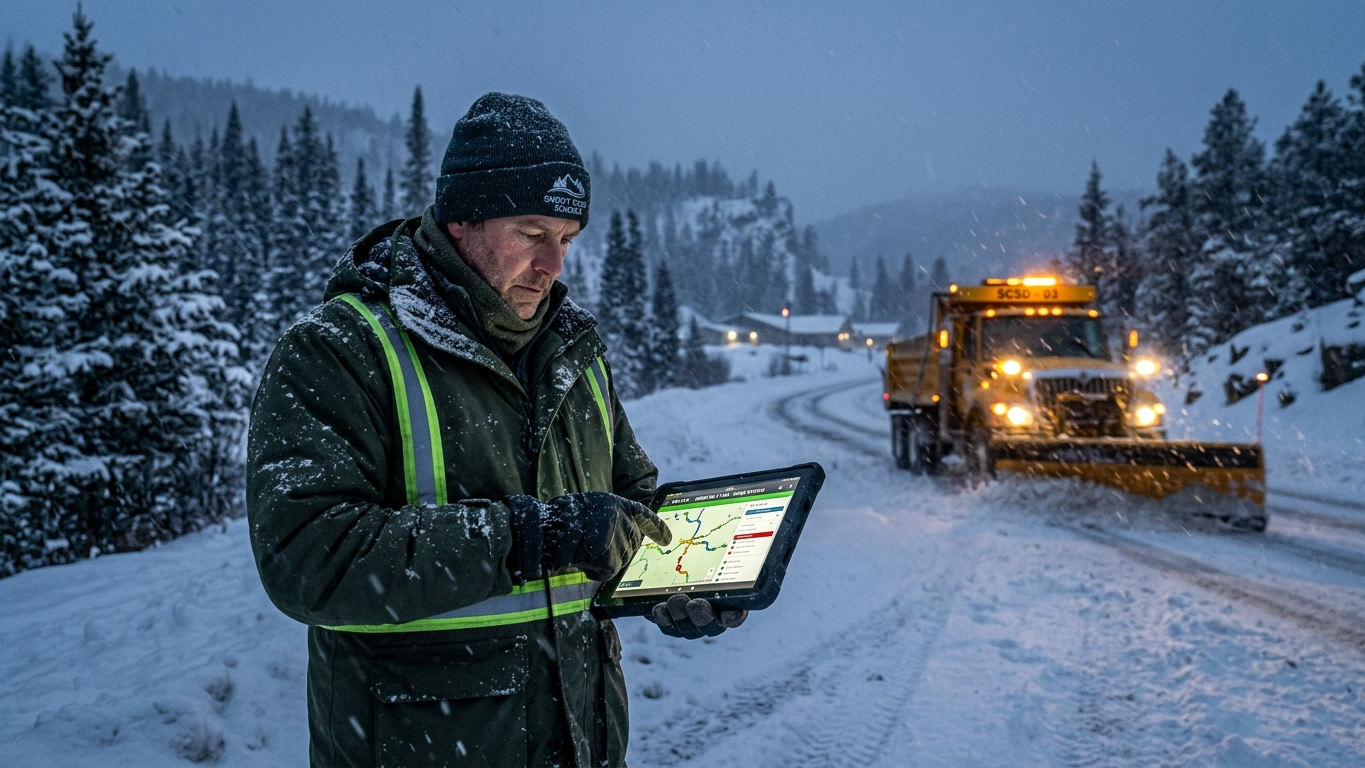
Around 4:30 or 5 in the morning, the superintendent gets on the phone with road crews, bus garage managers, and sometimes the local police. They talk about ice, plow schedules, and which back roads still look like a luge track. That conversation decides your snow day — not a website.
The big factors:
Road conditions. Plows need time. If the snow is still coming down hard at 5 a.m., the buses can’t safely run routes by 7.
Bus routes. Rural districts with long gravel roads close much faster than city districts with plowed streets. My sister teaches in a city district that opens in almost anything. My cousin’s kids ride a bus 45 minutes down country roads, and their district closes for half the snow.
Wind chill and cold. Some Northern districts close for extreme cold even without snow. Wind chills of 30 below zero are dangerous for kids waiting at bus stops, full stop.
District personality. This is the part no calculator fully captures. A district in Maine laughs at 6 inches. A district in Georgia shuts down for 2. Snow day calculators try to learn this from history, but every year has surprises.
Delays, not just closures. There’s a third option many calculators forget: the two-hour delay. If the snow is manageable but the roads need a few extra hours, school starts late instead of being canceled. The closure-tracking sites that cover “closings and delays” separately show just how often districts pick the middle path — and how rarely algorithms see it coming.
The 5 a.m. truth: Road crews, bus garage managers, and one superintendent decide your snow day. No website is on that call.
Why Calculators Get It Wrong
I want to be fair to the calculators, because they’re genuinely fun. But they miss for three reasons.
The numbers aren’t bad, either. One Canadian predictor that back-tests its algorithm reports 85-90% accuracy on major snow events, and a rival claims a 97% verified rate on its highest-confidence predictions. Take those figures with a grain of salt — they’re self-reported — but they show the tools are more than random dice rolls.
The first reason is simple: forecasts drift. A storm can slow down, speed up, or shift 50 miles overnight. The calculator can only read what the forecast says right now.
Then there’s the district thing. Every district is weird in its own way. One might cancel because of a bus driver shortage, not snow. Another stays open through a blizzard because they haven’t used a snow day in six years and the calendar has no room. No algorithm can predict that.
And finally, the human factor. Superintendents get pressure from both sides. Parents want safety. Working parents want school open. The final call is a judgment, not a calculation.
One winter, our district canceled school with only 3 inches on the ground because the storm hit during bus pickup. Another time, we had 7 inches and school stayed open because it fell on a Sunday night and plows had all day. Same town, same snow totals, different outcomes. The timing and the humans made the difference.
The AI Twist on Snow Forecasting
For a tools nerd like me, this is where things get interesting. The old snow day calculators are rule-based — simple math on forecast numbers. The new wave uses AI.
AI weather models can chew through years of historical storm data, road reports, and district decisions to make hyperlocal predictions that old-school formulas miss. Some apps now predict snow totals street by street, not city by city. That’s a real upgrade for the snow day question, because your bus stop might be 10 miles from the weather station the old calculators rely on.
The same AI wave is hitting every corner of the tools world. If you’re curious how far it reaches, our breakdown of whether FrostyTools uses AI shows how even small weather and utility tools are getting smarter behind the scenes.
Don’t get me wrong — AI forecasts are better than the old ones, but they still can’t outthink a superintendent standing on a frozen road at 5 a.m. Use them as a better guess, not a guarantee.
How to Use a Snow Day Calculator Like a Pro
Want the best odds of a correct guess? Do what I do now:
Check the night before. Look at the calculator and the National Weather Service forecast for your exact town, not the big city 20 miles away. If both agree on heavy morning snow, the odds are real.
Check your district’s history. If your district has canceled for 3 inches before, a 4-inch forecast is a big deal. If they’ve never canceled for less than 8, don’t get your hopes up for 5.
Know the announcement times. Most districts decide between 4:30 and 6:30 a.m. Follow your district’s official app, text alerts, or local news. That’s the only source that matters when the sun comes up.
Recheck at 5 a.m. Forecasts drift overnight, and even the predictors admit their night-before scores are less accurate than a morning update. If the calculator still says 90% after a recheck, you can start hoping for real.
Remember the golden rule. Snow during school hours doesn’t cancel school. The snow has to hit before the buses roll. A storm that arrives at 9 a.m. means you’re going to school and watching it from the window.
And if the calculator says 90%? Enjoy the hope. Just maybe study for the spelling test anyway.
FAQs
What is the most accurate snow day calculator?
No calculator is perfect, but the Snow Day Calculator and Snow Day Predictor are the two most popular. Accuracy depends on how close you live to the weather data they pull from. For the best guess, check one against the National Weather Service forecast for your town.
How does a snow day calculator work?
- You enter your ZIP code and school district.
- The tool pulls the latest snowfall forecast for your area.
- It compares that forecast to how much snow your district has canceled for in the past.
- More snow, colder temperatures, and stronger winds push the percentage up.
How much snow does it take to cancel school?
There’s no national number. Some Southern districts close for 2 inches. Many Northern districts ride out 6 or more. It depends on road crews, bus routes, and how used the area is to snow.
Do snow day calculators actually work?
They work as a fun, mostly reliable guess. They read forecasts and district history, but they can’t see the future. Forecasts change overnight, and superintendents make the final call based on road conditions checked at dawn.
When do schools announce snow days?
Most districts decide between 4:30 and 6:30 a.m. after road crews report conditions. Some announce the night before when the forecast is extreme. Check your district’s app, text alerts, or local news before 6 a.m.
Why did my snow day calculator say 90% but school stayed open?
The forecast probably changed overnight, or the storm arrived too late in the morning to matter. Snow that falls after buses have run rarely closes school.
The Bottom Line
A snow day calculator is a great little tool for the night before a storm. It reads the forecast, knows your district’s history, and gives you a fun percentage to obsess over while you try to sleep.
Just remember it’s a guess, not a promise. The superintendent decides with cold pavement reports and bus routes, not a website. Check the calculator, check your district’s official alerts, and go to bed.
Worst case, you wake up to snow, a hot breakfast, and that spelling test after all. And if you’re curious about the AI tools making predictions like this smarter every winter, we keep a running list of AI writing tools that save hours and the best AI productivity tools of 2026 over on the blog.
Disclaimer: Snow day calculators are prediction tools, not official sources. Forecasts change quickly, and every district makes its own call. Confirm school closures with your district’s official alerts and check your local National Weather Service forecast before making plans.