Author note: Written by a ToolsYards team member who has tracked her own cycle with period apps since college, and fact-checked against the medical sources linked throughout.
A period calculator sounds simple until it’s wrong. I’ve been tracking my period with apps since college, but I never really understood what these tools were doing behind the scenes. Then last spring mine told me my period was due on a Tuesday — and it showed up the following Sunday.
I wasn’t upset. A five-day miss is actually pretty normal. But it got me curious enough to dig into how these things work, why they’re sometimes off, and when the numbers actually matter. Here’s what I found, plus everything I wish someone had explained to me years ago.
What a Period Calculator Actually Does
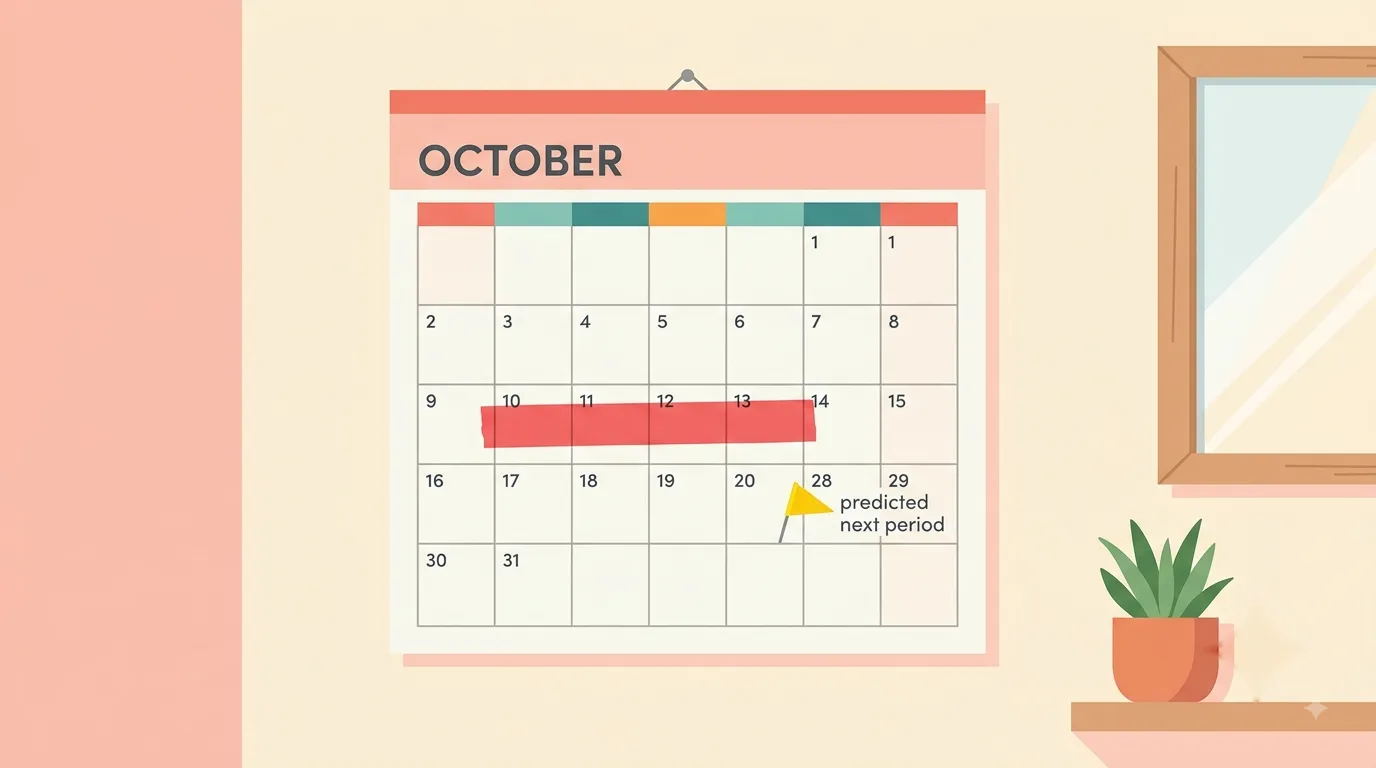
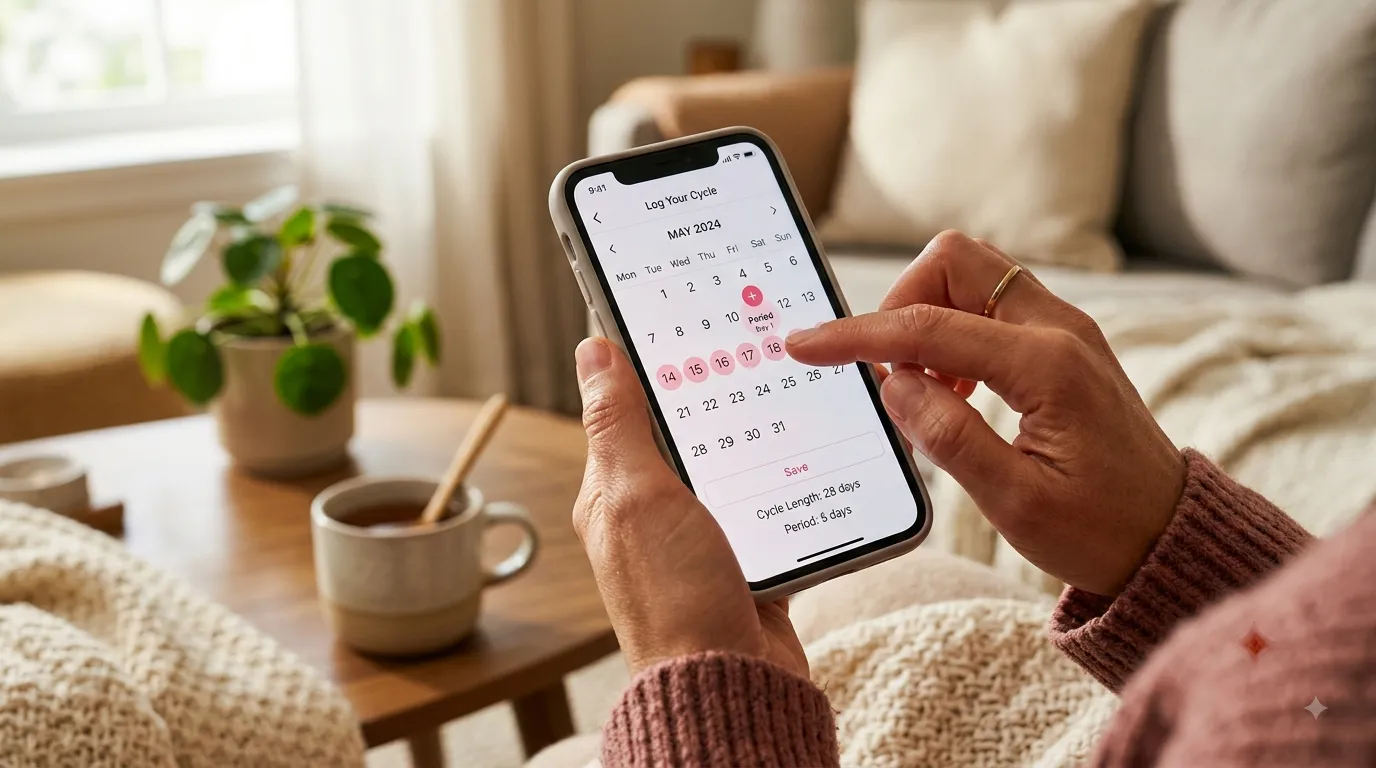
A period calculator takes two inputs — the first day of your last period and your usual cycle length — and returns an estimate of when the next one starts. Good ones also predict a few cycles ahead. The result is only as good as the data you feed it.
That’s the whole trick. Despite the slick interfaces, most period calculators are just date math. As the team at Natural Cycles puts it, these tools use date calculations only and are not medical devices — they estimate based on averages, not on anything your body is doing right now Natural Cycles on how period calculators work.
The first time I used one, I expected magic. The reality is more like a calendar with a really good memory. Your cycle is counted from the first day of one period to the first day of the next, and the calculator is basically asking: “How many days has it usually been for you, and what does that mean for this month?” Mayo Clinic on how the menstrual cycle is counted
How a Period Calculator Predicts Your Next Period
Here’s the part that made everything click for me: the luteal phase.
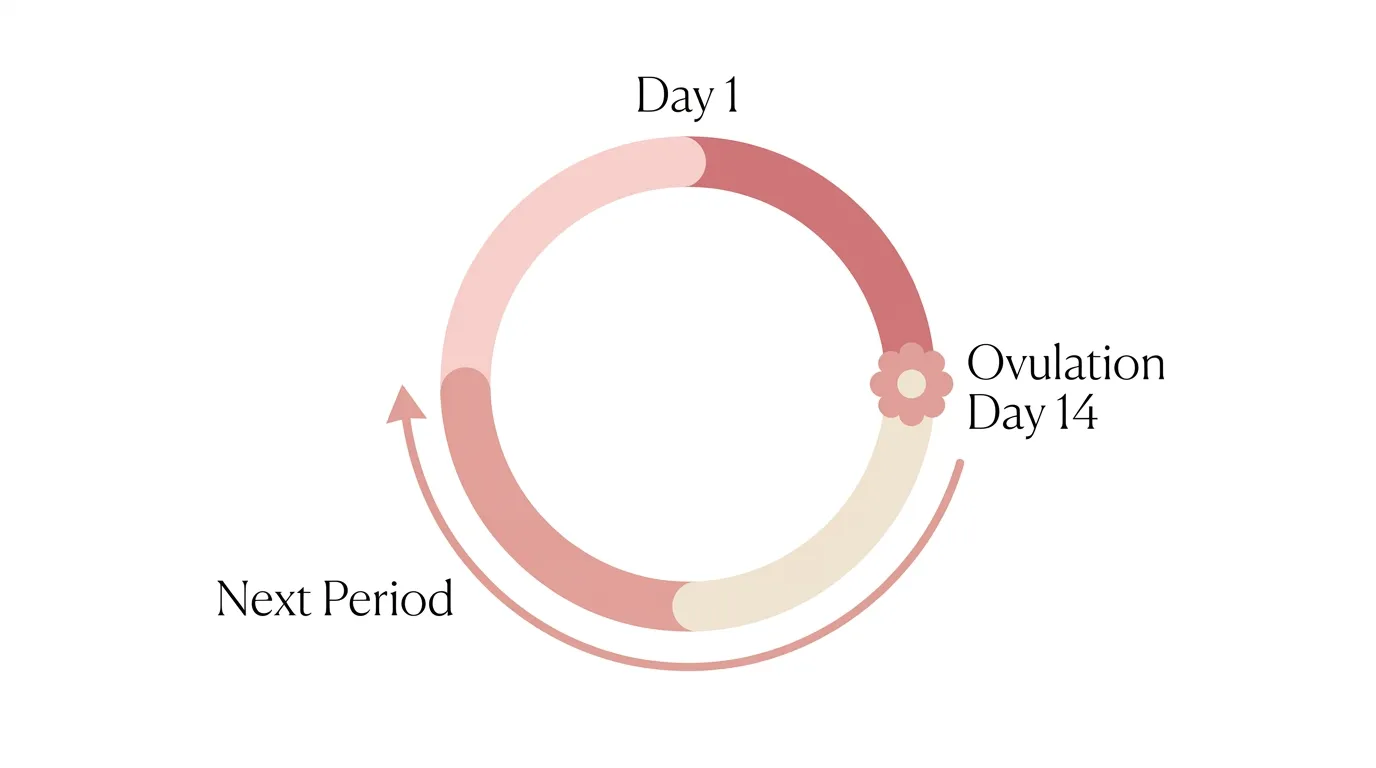
Your cycle has two halves. The first half runs from day one of your period up to ovulation. That half is the flexible one — it can stretch or shrink depending on stress, sleep, travel, all of it. The second half runs from ovulation to your next period, and for most people it’s stubbornly consistent at about 14 days. Your period arrives roughly 14 days after you ovulate, whether your cycle is 26 days or 33.
The math works like this: if you ovulate around day 14 of a 28-day cycle, your next period starts about 14 days after that. The Office on Women’s Health describes it simply — in a 28-day cycle, ovulation happens around day 14, and if the egg isn’t fertilized, hormone levels drop and the next period begins Office on Women’s Health on the menstrual cycle.
So a period calculator predicts your next period like this:
Next period ≈ first day of last period + your average cycle length
It estimates ovulation the same way, in reverse: ovulation usually happens 12 to 14 days before your next period starts, which is why Johns Hopkins Medicine suggests tracking your cycle for at least six months to pin down your fertile window Johns Hopkins on ovulation timing and fertility window.
The catch: the calculator only knows what you tell it. If you’ve only logged two cycles, it’s guessing with almost no data. The more months you track, the better its average matches your actual rhythm.
Dates aren’t the only data worth logging. Adding symptoms — cramps, sore breasts, mood swings — helps you spot your own pre-period pattern, which is why the better trackers ask for more than just dates Flo on logging symptoms.
How to Calculate Your Next Period by Hand
You don’t need an app for this. Grab a calendar and do what I did when my phone died on a road trip:
- Log your cycle lengths for a few months. Count the days between the first day of one period and the first day of the next. Do this for at least six cycles if you can — that’s the amount of data medical sites like Johns Hopkins suggest before predictions get useful Johns Hopkins on tracking for six months.
- Average them. If your cycles were 28, 30, and 29 days, your average is 29.
- Add that average to your last period start date. Last period started January 15? A 29-day average puts your next one around February 13.
That’s the whole manual method. A menstrual cycle calculator online just automates step three — and it’s a nice sanity check for your own arithmetic. It’s the same trick I use with every free tool on this site: punch in the numbers and let the machine do the boring part. (In the same spirit, I refuse to guess whether a school closure is coming — I check the Snow Day Calculator instead.)
How Accurate Is a Period Calculator?
Honest answer: it depends entirely on how regular you are.
For someone with a steady 28-day cycle, a period calculator is usually within a day or two. For everyone else, the accuracy drops fast. A 2021 study in Women’s Health tested ten popular period tracker apps against five different cycle profiles. The predictions conflicted, and ovulation day was often missed by one to nine days, because the tools lean on a “textbook” 28-day cycle with ovulation on day 14 — even when the person’s actual cycles said otherwise PubMed study on period tracker app accuracy.
Even the newest tech is an estimate, not a promise: a 2026 systematic review in npj Digital Medicine found wearable cycle trackers detect the fertile window with a pooled accuracy of about 88% — useful, but far from certain Nature on wearable cycle tracker accuracy.
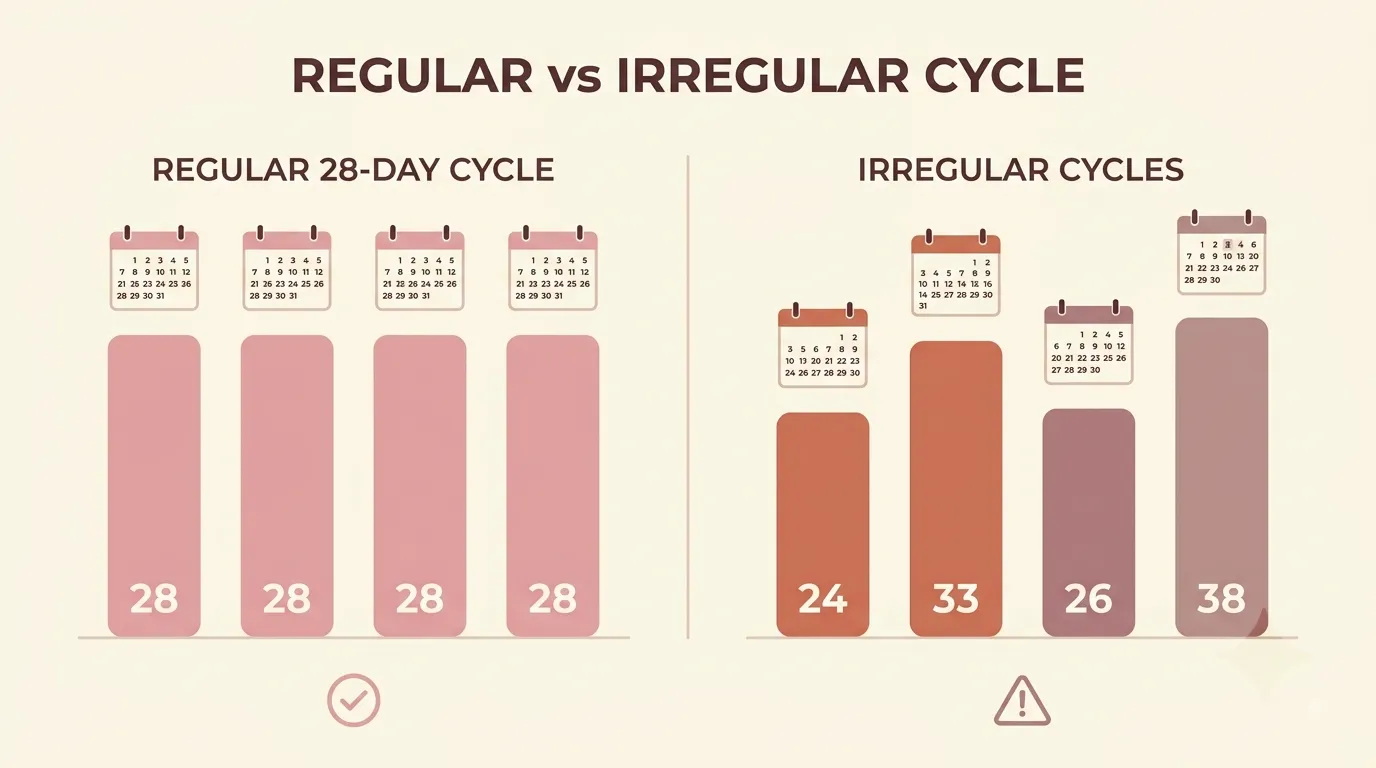
What counts as a regular cycle, anyway? The Mayo Clinic says bleeding can happen every 24 to 38 days and still be normal — and that “typical” simply means what’s normal for you Mayo Clinic on normal cycle range. Medically speaking, cycles count as irregular when the length jumps by roughly eight or more days from one cycle to the next, per the National Institutes of Health’s StatPearls review of the menstrual cycle StatPearls on what makes a cycle irregular.
So before you trust any prediction — mine included — check your own spread. If your last six cycles were 27, 29, 28, 31, 28, and 30 days, you’re regular enough that the estimate will feel reliable. If they were 24, 33, 26, 38, you’re going to see a lot of missed predictions, and that’s not the calculator’s fault.
Key takeaway: If your cycles are regular, predictions usually land within a day or two. If your cycle length swings by eight or more days, expect misses — that’s not a broken calculator, that’s what an estimate is.
What Throws the Numbers Off
Even with perfect data, life happens. These are the big ones:
Irregular cycles. If your cycle length varies a lot from month to month, an average is just a number in the middle of nowhere. The prediction will keep shifting as you log new data.
Stress. This one got me. A brutal work deadline pushed my period a full week late, and my app acted personally betrayed. Prolonged stress can genuinely lengthen or shorten your cycle — it’s one of the most common causes of a late period Medical News Today on stress and late periods.
Birth control. Hormonal birth control can change your bleeding pattern entirely — including making periods lighter, shorter, or sometimes skipped. Your tracker has no idea your pill pack ended a week early, and it will keep predicting on your old schedule Medical News Today on birth control and missed periods.
Perimenopause. Starting in your 40s, cycles often get shorter, then longer, then unpredictable as you approach menopause — which, for reference, most people reach around age 52 Medical News Today on perimenopause and irregular cycles. A calculator built on your 20-something cycle history is useless here. Expect the estimates to drift.
PCOS and other hormone conditions. Polycystic ovary syndrome is a common cause of irregular periods — and a big reason a calculator’s average stops meaning much. If your cycles are all over the map, that’s a conversation for a doctor, not an app healthdirect on PCOS and irregular periods.
Illness, travel, and weight changes. Big swings in either direction can delay ovulation and push your period out. Same logic as stress: the flexible first half of the cycle stretches, and the period lands late.
Ovulation Calculator vs. Period Calculator: What’s the Difference?
They look identical and they’re not the same tool.
A period calculator answers “when is my period due?” An ovulation calculator answers “when am I most fertile?” It predicts your fertile window — roughly the five days before ovulation, the day of ovulation, and the day after, when pregnancy is most likely, according to Johns Hopkins Medicine Johns Hopkins on the fertile window.
Different goals, same ingredients. Both start with your last period date and cycle length, then use the roughly 14-day luteal phase to work forward (next period) or backward (ovulation). If you’re trying to conceive, you want the ovulation calculator. If you’re planning a beach trip and want to know whether your period will cooperate, you want the period calculator.
One important warning, from a person who learned this the hard way: none of these free calculators are birth control. They’re just date predictions — and a prediction is not protection. The Natural Cycles folks say it plainly — these tools are not medical devices and should never be used as contraception Natural Cycles on calculators not being birth control.
When the Calculator Is Wrong — and When to See a Doctor
Here’s the rule I finally internalized: the calculator can be wrong and that’s fine, but your body being wrong is worth a phone call.
Cleveland Clinic recommends seeing a provider if you notice any of these Cleveland Clinic on when to see a doctor for irregular periods:
- Bleeding so heavy you soak through a pad or tampon every hour for two or three hours, or clots bigger than a quarter
- Periods lasting longer than seven days
- Periods that suddenly become very irregular after years of being regular
- Missing your period for three or more months in a row (and no, the calculator can’t explain that one)
And if your period is late and there’s any chance you’re pregnant, skip the app entirely — take a test. No calculator can tell you that.
Period Calculator FAQs
How accurate is a period calculator? For people with regular cycles, predictions are usually within a day or two. For irregular cycles, expect misses — research on period tracking apps found results often conflict and ovulation day is frequently estimated early PubMed study on app accuracy. Accuracy improves the more cycles you log.
Can a period calculator tell me if I’m pregnant? No. Period calculators only estimate dates. If your period is late and pregnancy is possible, take a test.
Why does my period calculator keep changing the predicted date? Because you keep feeding it new data. Every cycle you log nudges your average, and the predicted date shifts with it. That’s the tool working as designed — irregular cycles mean moving targets.
What is a normal cycle length? Bleeding every 24 to 38 days is considered typical, and periods can last up to eight days Mayo Clinic on what’s normal. Cycles of 21 to 35 days are also commonly described as normal. What matters most is your own pattern.
When should I see a doctor about irregular periods? See a provider for:
- very heavy bleeding
- periods longer than seven days
- periods that become suddenly irregular after being regular
- three or more missed periods in a row
The Bottom Line
A period calculator is a planning tool, not a crystal ball — and not a medical device. Mine nails the date when my cycle is behaving, and it misses by days when stress or travel throws everything off. That’s not a bug; it’s what an estimate is.
Use it to plan trips, stock your bag, and understand your own rhythm a little better. Feed it months of real data, treat the output as a range instead of a promise, and let your doctor handle anything that looks off. Your cycle is yours — the calculator just helps you keep track of it.
Key takeaway: A period calculator is a planning tool, not a medical device — and not a crystal ball. Feed it months of data, treat the output as a range, and let your doctor have the final word.
Ready to stop guessing? Plug in your last period start date and average cycle length in the free period calculator on toolsyards.com and see when your next period is due — plus three months of predicted cycles — in about ten seconds. While you’re there, it’s a handy site to keep bookmarked for other everyday tools, from the Snow Day Calculator to roundups like Best AI Productivity Tools in 2026 and How AI Writing Tools Save You Hours Every Week for the rest of your to-do list.
This article is for informational purposes only and is not medical advice. If you’re concerned about your cycle — heavy bleeding, missed periods, or anything that feels off — talk to your doctor or another qualified healthcare provider.